
Somatic Yoga for Beginners: A Women's Guide to Healing from the Inside Out
If you've been scrolling past somatic yoga content lately and wondering what it actually is — and whether it's for you — you're in the right place.
Somatic yoga is one of the most powerful healing tools I've ever encountered. It's slow, it's gentle, and it asks you to actually feel your body instead of just move it.
For women who've spent years overriding their bodies — pushing through period pain, running on empty, disconnecting from anything below the neck — that's kind of radical.

I discovered somatic practices during a difficult period of my own life in Thailand. I'd been practicing yoga for years but nothing I was doing had helped me heal the anxiety, the painful periods, or the stored trauma I was carrying. It wasn't until I found body-centred, somatic approaches that things actually started to shift because I finally slowed down enough to listen.
In this guide I'm breaking down everything you need to know to start somatic yoga as a beginner, and why the women's angle on this practice is something most guides completely miss.
In this article:
What is somatic yoga for women?
How somatic yoga is different from regular yoga
Why it's especially powerful for women
What to expect as a beginner
5 beginner somatic yoga practices for women to try today
A real client story
FAQ
Next steps
What is Somatic Yoga?
The word "somatic" comes from the Greek soma, meaning body. Somatic yoga is a body-centred practice that combines the principles of yoga with somatic therapy — focusing on internal sensation, nervous system regulation, and the release of stored tension and trauma from the tissues.
Where most yoga asks "can you do this pose?", somatic yoga asks "what do you feel in this pose?" The external shape matters far less than the internal experience.
It's slow. It's intentional. And it works with your nervous system rather than against it.
Somatic yoga draws from several therapeutic traditions including Hanna Somatics, the Feldenkrais Method, trauma-informed yoga, and polyvagal theory — the science of how the nervous system responds to safety and threat.
The result is a practice that genuinely helps the body release what it's been holding, rather than layering more effort and performance on top of it.
How Somatic Yoga is Different from Regular Yoga
Most yoga — vinyasa, power yoga, even many hatha classes — is still very externally focused.
You're moving through shapes, following a sequence, keeping up with the class. There's nothing wrong with that. But it's not somatic.
Somatic yoga is different in these key ways:
The pace is slow:
You move through postures very slowly, pausing frequently to notice sensation. There's no rushing to the next pose.
Internal awareness comes first:
You're always being guided back to what you feel — where is there tension? Where does the breath catch? What does this area of your body want to do?
Rest is built in:
Somatic yoga treats rest as active practice, not laziness. Pausing and integrating after each movement is part of the process.
There's no performance. There's no correct expression of a pose. The goal is awareness, not aesthetics.
It works with the nervous system:
Somatic yoga is specifically designed to help regulate your nervous system — moving you from a chronic state of stress and activation into genuine rest and safety.

Why Somatic Yoga is Especially Powerful for Women
Here's what most beginner guides to somatic yoga miss entirely: the female body holds tension differently, and in specific places.
The pelvis, the womb space, the hips, the pelvic floor: these areas are particularly sensitive to emotional stress, trauma, and the chronic "holding" that comes from years of people-pleasing, over-functioning, and suppressing natural feminine experiences like menstruation, sexuality, and emotion.
Many women I work with come to me having tried yoga for years with limited results. Not because yoga doesn't work — but because the yoga they were doing wasn't addressing the specific areas of the body where women store tension and trauma.
Somatic yoga for women goes deeper than the standard sequences. It includes:
Pelvic floor awareness and breathwork
Hip-opening somatic sequences that address emotional holding
Womb connection practices
Nervous system regulation specifically tailored to the female stress response
Cycle-informed practice: moving with your menstrual phases rather than against them
When women begin to bring somatic awareness to these areas — often for the very first time — the shifts can be profound.
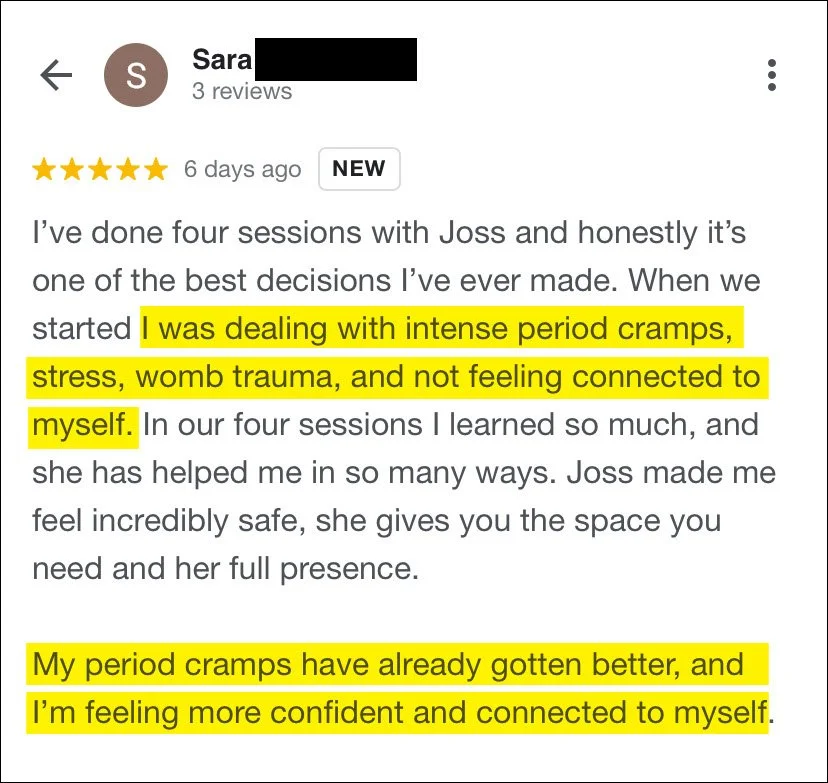
I've seen women experience relief from period pain they'd been managing for a decade. I've watched clients go from pelvic tension so chronic they'd forgotten what relaxed felt like, to genuine ease in their bodies. Somatic yoga gave their nervous system permission to finally let go.
A Client Story
One of my clients came to me after being diagnosed with PCOS.
She'd tried everything medically and was exhausted, frustrated, and completely disconnected from her body. She told me in our first session that she'd basically felt like she was at war with her own body.
We started with the most basic somatic practices: breath awareness, gentle pelvic rocking, slow hip circles with her eyes closed, noticing sensation without trying to fix it. Nothing dramatic. Nothing that looked impressive from the outside.
After a few weeks she messaged me: "I don't know what's happening but my period pain has already reduced."
That's what happens when you finally giving the body the conditions it needs to release what it's been holding.
What to Expect as a Beginner
If you're new to somatic yoga, here's what to know going in:
It might feel underwhelming at first:
If you're used to intense movement, slowing down this much can feel strange or even cause fatigue. Stick with it. The shifts happen beneath the surface.
Emotions may surface:
When the body starts to release stored tension, it's common to feel unexpected emotions — sadness, relief, or just a wave of tiredness. This is normal and healthy. It means it's working.
You won't be "good" at it immediately:
Body awareness is a skill that builds over time. In the beginning you might feel like you can't feel anything. That's okay. Keep showing up.
Consistency matters more than duration:
10 minutes three times a week will do more than a single 90-minute session. Regularity is what helps the nervous system build a new baseline.
It's not about pushing through:
If something feels like too much, it is too much. Somatic yoga is always gentle and at your own pace.
5 Beginner Somatic Yoga Practices to Try Today
These are simple, accessible practices you can do at home with no equipment. All you need is a comfortable place to lie down or sit.
1. Belly Breathing with Womb Awareness
Lie on your back with your knees bent. Place both hands on your lower belly, just below your navel. Breathe in slowly through your nose, letting your belly rise into your hands. Exhale fully. Stay here for 10 breaths with awareness of this space in your body.
2. Slow Pelvic Rocking
Still lying on your back, begin to gently rock your pelvis — tilting it forward so your lower back arches slightly, then back so it flattens against the floor. Do this as slowly as you possibly can.
Notice where you feel movement, where you feel tension, where things feel stuck or free. Continue for 2–3 minutes.
3. Hip Circles (Lying Down)
Draw your knees to your chest and begin making slow, wide circles with your knees — as if you're slowly stirring a big pot.
Reverse direction after a minute. Keep your jaw soft and your breath steady.
This one is deceptively simple, deeply releasing for lower back, and calming for the nervous system.
4. Supported Reclined Butterfly
Lie on your back and bring the soles of your feet together, letting your knees fall open.
Place a pillow or rolled blanket under each knee for support. Rest your hands on your belly or inner thighs. Close your eyes. Stay here for 5 minutes, breathing naturally and noticing sensation in your inner thighs, pelvis, and belly.
Let gravity do the work.
5. Body Scan + Grounding
Sit or lie comfortably and slowly bring your awareness through your body from feet to crown — not trying to change anything, just noticing.
Where is there tension?
Where does your body feel heavy or light, open or closed?
Finish by pressing your feet or the back of your body gently into the floor and taking three long, slow breaths.
Ready for Guided Support?
Somatic yoga is most powerful when you're guided through it by someone who understands both the practice and the specific needs of the female body. Going it alone can only take you so far — especially if you're working with stored trauma, chronic pain, or womb-related conditions.
If you'd like personalised guidance tailored to exactly what's going on in your body, I offer a free consultation where we can talk about what you're experiencing and what a somatic yoga therapy practice could look like for you.
FAQ: Somatic Yoga for Beginners
Is somatic yoga good for beginners with no yoga experience?
Yes — it's actually ideal for beginners. Because the focus is on internal awareness rather than physical performance, there are no poses to "get right" and no flexibility required. If you can breathe and lie down, you can do somatic yoga.
How is somatic yoga different from yin yoga?
Yin yoga holds passive poses for long periods to target connective tissue.
Somatic yoga uses slow, intentional movement with an emphasis on nervous system awareness and sensation.
Both are slow, but somatic yoga is more actively therapeutic and trauma-informed. They complement each other well.
Can somatic yoga help with period pain?
Yes, and this is one of the areas I see the most significant results.
Chronic pelvic tension is one of the biggest contributors to period pain — and somatic yoga, by addressing that tension at a nervous system level, can bring real relief over time.
It's not a one-session fix, but with consistency many women notice a meaningful reduction in pain.
Can somatic yoga help with anxiety?
Absolutely. Somatic yoga works directly with the nervous system and is one of the most effective tools I know for shifting out of chronic anxiety. The body-first approach means you're not just thinking your way to calm — you're actually helping your nervous system find safety.
How often should a beginner practice somatic yoga?
Start with 2–3 times a week, even just 15–20 minutes. Consistency is more important than length. Over time you can build up, but small and regular will always beat occasional and intense with somatic work.
Do I need a physical womb to benefit from women's somatic yoga?
No. The womb in somatic women's practice refers to the energetic and somatic centre of the body — the pelvis, sacrum, and lower belly. Trans women, women who've had hysterectomies, and non-binary people can all benefit fully from these practices.
Is somatic yoga the same as somatic therapy?
They overlap but aren't identical. Somatic therapy is a clinical approach delivered by a trained therapist. Somatic yoga draws on somatic principles and can be deeply therapeutic, but it's a movement and wellness practice rather than a clinical intervention. For significant trauma, I recommend working with both.
Your Next Step
Somatic yoga changed my body and my life because it was the first thing that actually asked me to slow down, listen, and feel.
If you're a woman who's been pushing through, overriding your body, or simply feeling disconnected from yourself, this practice is for you.
The best first step is always to experience it with guidance.
I offer a free consultation so we can talk about what you're working with and explore what somatic yoga therapy could do for you specifically.
Thanks for being here. Joss | Yoga Therapist C-IAYT
About The Author

Joss Frank, Yoga Therapist C-IAYT
I'm Joss, founder of Wild Womb. I specialise in somatic yoga, womb healing, and nervous system regulation for women. After years of struggling with painful periods, anxiety, and stored trauma — and getting nowhere with conventional approaches — I found my way home through somatic practice. Now I help women do the same, online, from anywhere in the world. All my work is trauma-informed and rooted in one belief: you were never broken. You just needed a practice that finally listened to your body.