

The Blog
Explore yoga therapy, nervous system healing, and natural approaches to anxiety, hormones, and pelvic health for women
Visit the Blog >
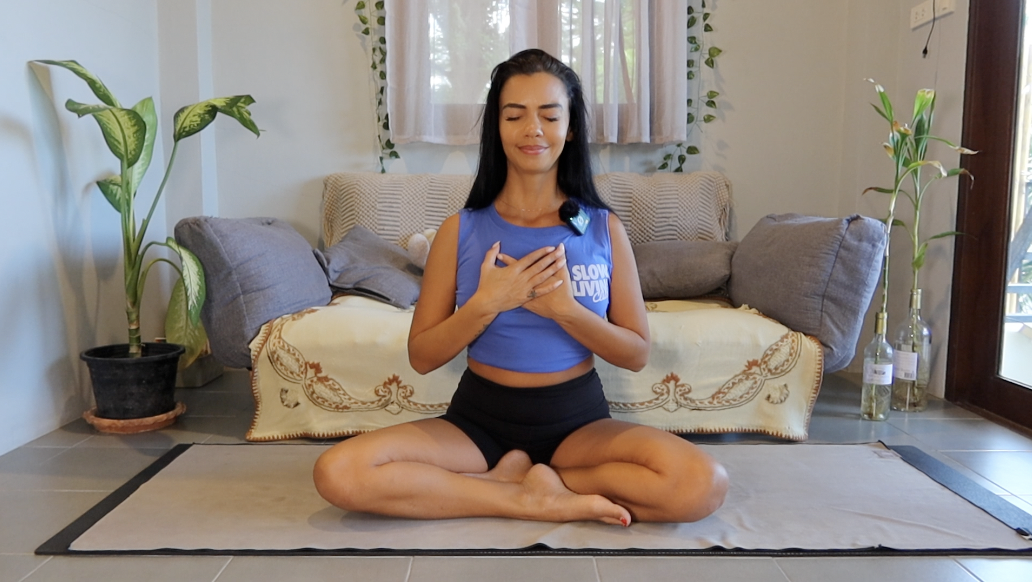
How Stress Affects Your Period, Hormones, and Pelvic Health (and How Yoga Therapy Can Help)
Chronic stress shows up in your period, hormones, and pelvic health. Learn how yoga therapy helps calm your nervous system so you feel at home in your body.
Did you know that stress directly affects your pelvic health, menstrual cycle, libido, and hormonal balance?
Most women know stress isn’t good for them. But very few realize how deeply it affects their body and even fewer have been given practical, body-based tools to actually do something about it.
I’m Joss Frank, a Certified Yoga Therapist (C-IAYT) specialising in women’s pelvic health and nervous system regulation. In this guide I’ll explain exactly how stress impacts your body as a woman, and how yoga therapy gives you the tools to manage stress and protect your pelvic and menstrual health.
How Stress Affects Your Period, Hormones, and Pelvic Health
Stress has a direct and significant impact on the health of your pelvic floor and reproductive system, and it’s well-documented in medical research.
When you experience stress, your body activates the HPA axis — your stress hormone system — flooding the body with cortisol and adrenaline.
In the short term, this is protective. But when stress becomes chronic, this activation disrupts the entire hormonal cascade that regulates your menstrual cycle, fertility, libido, and pelvic floor function.
Specifically, chronic stress can cause:
Irregular, late, or missed periods
Heavier or more painful periods
Worsened PMS symptoms
Reduced libido
Pelvic floor tension and tightness
Hormonal imbalance affecting fertility and perimenopause
Chronic pelvic pain
A stressed body cannot optimally support the feminine experiences of menstruation, sexuality, and hormonal balance.
Managing stress isn’t a luxury, it’s foundational to your pelvic health and can be done in as little as 10 minutes a day.
Tried everything to manage stress and still can’t switch off?
This free 15-minute guided womb meditation works with your body to calm the nervous system and help you feel safe in your body again.
My Personal Experience With Stress and Pelvic Health
For years I lived with chronic stress, not realising how deeply it was affecting my body and cycle.
I had no idea that my irregular periods, low libido, anxiety, and depression were all connected — and that unmanaged stress was the thread linking all of it.
I didn’t know how to self-regulate.
I’d gotten so used to the physical signs of stress like muscle tension, shallow breathing, a racing heart, digestive issues that they had become my normal. I was living in a body that was constantly braced, and I didn’t even know it.
When I discovered yoga therapy and somatic healing, everything changed. I finally had body-based tools that helped me actually feel what was happening inside me, and gently begin to change it.
The practices were simple. A few minutes of breathwork. A short meditation. Moments of conscious self-compassion. But the changes to my stress levels and pelvic health were profound, and they came from consistency, not intensity.
That’s what I want for you too.
What Is Yoga Therapy and How Does It Help With Stress?
Yoga therapy is a clinical, evidence-informed application of yoga tools:
gentle movement
breathwork
meditation and yoga nidra
somatic awareness
… all tailored to address specific health conditions.
It’s not a group yoga class. It’s a personalised, therapeutic practice designed to work with your specific body, history, and nervous system.
How Yoga Therapy Helps Your Body Release Stress:
For stress and pelvic health, yoga therapy works on several levels at once:
Regulating the nervous system by activating the parasympathetic response (rest and digest)
Releasing chronic muscle tension held in the pelvis, hips, jaw, and shoulders
Building interoception: the ability to sense what’s happening inside the body
Processing stored emotional tension through somatic awareness
Supporting hormonal health by easing the stress load on your body
In my yoga therapy practice, I guide women through my unique framework: Release → Rediscover → Reclaim
Release: First we create safety in the body and release stored tension.
Rediscover: Then we reconnect with body sensation and the natural feminine rhythm.
Reclaim: Then we reclaim energy, vitality, and feminine embodiment.
5 Yoga Therapy Practices to Reduce Stress and Reconnect With Your Body
These are the core practices I use with clients and in my own daily life. They don’t require hours of your time, just 10 minutes a day, done consistently, creates real change in the nervous system over time.
1. Womb Yoga
Womb yoga is a gentle, feminine-focused yoga practice that works specifically with the pelvic space, hips, sacrum, and lower belly.
Unlike general yoga classes designed for the male body, womb yoga honours the rhythmic, cyclical nature of the feminine body and includes practices that foster direct connection with the womb and reproductive organs.
Womb yoga practices may include pelvic opening poses, womb meditations, breathwork to connect with the pelvic muscles, and slow somatic movement to release chronic tension in the hips and lower back.
This practice helps soften pelvic tension and builds a sense of safety and connection in the body.
2. Womb Yoga Nidra
Yoga nidra is considered a gentle form of guided meditation that brings the nervous system into a profoundly restorative state — somewhere between waking and sleep. In this state, the body can process and release stored stress at a level that active practice cannot reach.
Womb yoga nidra is a variation that specifically guides awareness through the womb space — the uterus, ovaries, vagina, and pelvic bowl — helping women reconnect with this part of the body with compassion and curiosity rather than pain or disconnection.
You don’t need a physical womb to benefit from this practice. The energetic and somatic experience of connecting with this space is equally powerful.
► Download the 30-Min Womb Healing Ritual (includes an 18-minute womb yoga nidra practice)
3. Breathwork for Nervous System Regulation
Specific breathwork practices are among the most direct tools available for shifting the nervous system out of fight-or-flight.
Extended exhale breathing (exhaling twice as long as your inhale) activates the parasympathetic nervous system (your body’s rest and digest mode) and reduces cortisol.
Bhramari pranayama (humming breath) is another highly effective practice. In one study, a single session of Bhramari lowered heart rate and blood pressure compared to normal breathing (Kuppusamy et al., 2016).
Even 5 minutes of conscious breathwork daily can help your body find its way back to calm more easily over time.
4. Affirmation Practice
Affirmations work best when they’re paired with body awareness rather than just repeated mentally.
In yoga therapy, affirmations are used as somatic anchors — statements repeated slowly, with full attention in the body, to begin shifting deeply held beliefs and stress patterns.
Self-affirmation theory, first introduced by psychologist Claude Steele in 1988, suggests that affirming what matters most to you helps protect you from stress.
Later research backed this up: people who reflected on their most important personal values had lower cortisol responses to stress. (Creswell et al., 2005).
Simple affirmations like “I am safe in my body” or “I trust my body’s wisdom” repeated consistently as part of a daily practice create real neurological change over time.
5. Self-Compassion
Self-criticism activates the same threat response as external stress — flooding the body with cortisol and keeping the nervous system in survival mode. Self-compassion does the opposite.
Research on self-compassion, pioneered by Dr. Kristin Neff, links it with lower stress and greater emotional resilience. Even a simple self-soothing gesture, like placing your hand on your heart, has been shown to lower cortisol responses to stress (Dreisoerner et al., 2021).
A simple starting practice: when you notice self-critical thoughts, pause and ask yourself “Would I speak this way to someone I love?”
That one moment of awareness begins to interrupt the pattern.
How to Start a Yoga Therapy Practice for Stress
You don’t need a lot of time. A consistent 10-minute daily practice is more effective than an occasional hour-long session.
Here’s a simple daily routine for stress reduction:
5 minutes of extended exhale breathwork to regulate your nervous system
5 minutes of body scan or womb awareness meditation to reconnect with sensation
One affirmation repeated slowly with full body awareness
Over time, add gentle womb yoga movement and yoga nidra as feels right
Consistency matters far more than duration. Your nervous system needs repetition to build new patterns of safety. Even on days when you feel okay, showing up for your practice is what keeps your baseline stress low.
Frequently Asked Questions About Yoga Therapy for Stress
How can I use yoga therapy to reduce stress and reconnect with my body?
Yoga therapy reduces stress through a combination of nervous system regulation, somatic movement, breathwork, and body awareness practices.
As a Certified Yoga Therapist (C-IAYT) specialising in women’s health, I work with women 1:1 online to develop a personalised practice that addresses their specific stress patterns, pelvic health concerns, and nervous system needs.
Book a free discovery call to find out if yoga therapy is right for you.
Is yoga therapy the same as regular yoga?
No. Yoga therapy is a clinical, individualised application of yoga tools to address specific health conditions.
It’s evidence-informed, trauma-sensitive, and tailored to the individual.
A yoga therapy session looks very different from a group yoga class and is designed to address specific symptoms and root causes rather than general fitness.
How does stress affect pelvic health?
Chronic stress elevates cortisol which disrupts the hormonal cascade regulating the menstrual cycle, fertility, and libido.
It also causes the pelvic floor muscles to chronically brace and tighten, contributing to pelvic pain, period pain, and sexual discomfort.
Addressing stress through nervous system regulation is a gentle, natural way to support your pelvic health. Learn more about the signs of hormone imbalance in women.
How long does it take to see results from yoga therapy for stress?
Every body is different. Many women first notice small shifts, like feeling calmer, sleeping better, or being more aware of their body.
Deeper changes come with consistent practice. Consistency matters far more than intensity.
Can yoga therapy help with stress-related period pain?
Yes, this is one of the most common reasons women come to me.
Stress can worsen period pain, PMS, and cycle irregularity. Yoga therapy supports you by easing your body’s stress load and releasing pelvic tension. Learn more about natural period pain relief and yoga therapy for PCOS.
Want to start easing period pain today? Get my free Period Pain Guide with 3 foundational practices: Get the free guide
What is womb yoga?
Womb yoga is a feminine-focused yoga practice that works specifically with the pelvic space, womb, and reproductive organs.
Unlike general yoga, it honours the cyclical nature of the feminine body and includes practices that foster direct somatic connection with the womb space.
It is particularly supportive for women with period pain, pelvic tension, hormonal imbalance, and body disconnection.
Ready to Feel Safe and at Home in Your Body Again?
You’ve tried managing stress with your mind: the apps, the routines, the wellness trends. But stress doesn’t only live in your thoughts. It lives in your body, your pelvis, and your cycle.
In my private online yoga therapy sessions, we work directly with your nervous system using gentle somatic movement, breathwork, womb yoga, and guided meditation, all tailored to you, your body, and your history. So you can finally switch off, and feel at home in your body again.
Start with a free 20-minute discovery call. It’s just you and me and a patient space to finally tune inwards, and to see whether yoga therapy is right for you.

About The Author
Joss Frank is a Certified Yoga Therapist (C-IAYT) and E-RYT 500 specialising in women’s stress, pelvic health, womb healing, and nervous system regulation. She is the founder of Wild Womb and has supported hundreds of women to reduce stress, reconnect with their bodies, and restore their pelvic health through online yoga therapy sessions, courses, and guided meditations.